
Subscribe to get simple and delicious weekly recipes
Low Sodium Chicken Ramen

This low sodium chicken ramen is light, warm, and full of tender noodles, chicken, and fresh vegetables. It is a heart-healthy noodle soup that keeps bold flavor while helping reduce sodium intake. Perfect for a quick and nourishing meal.
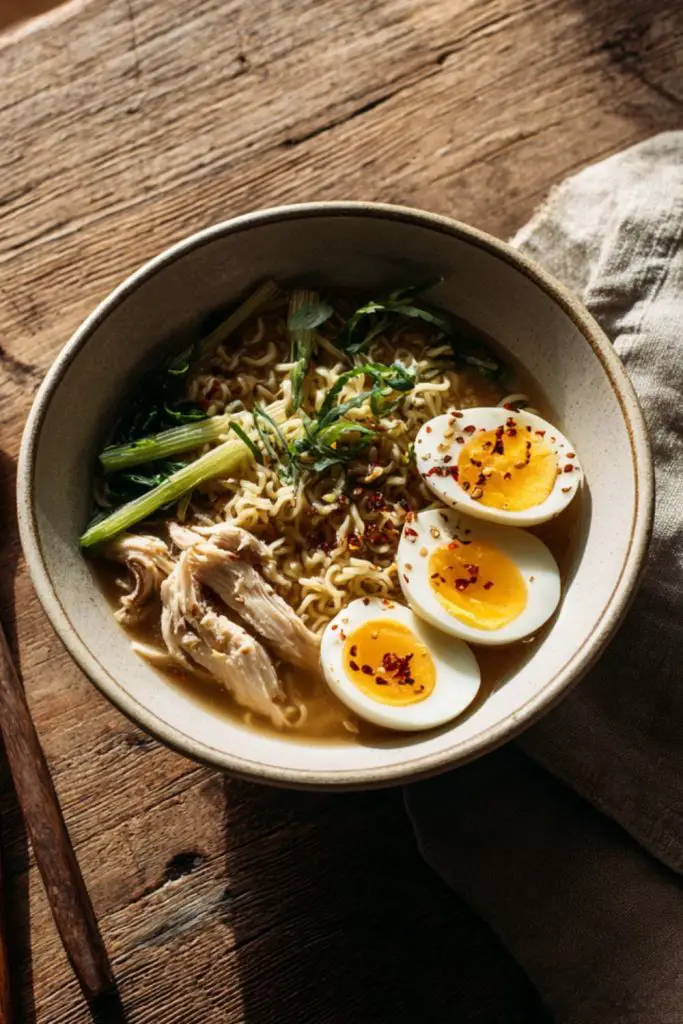
Ingredients Needed:
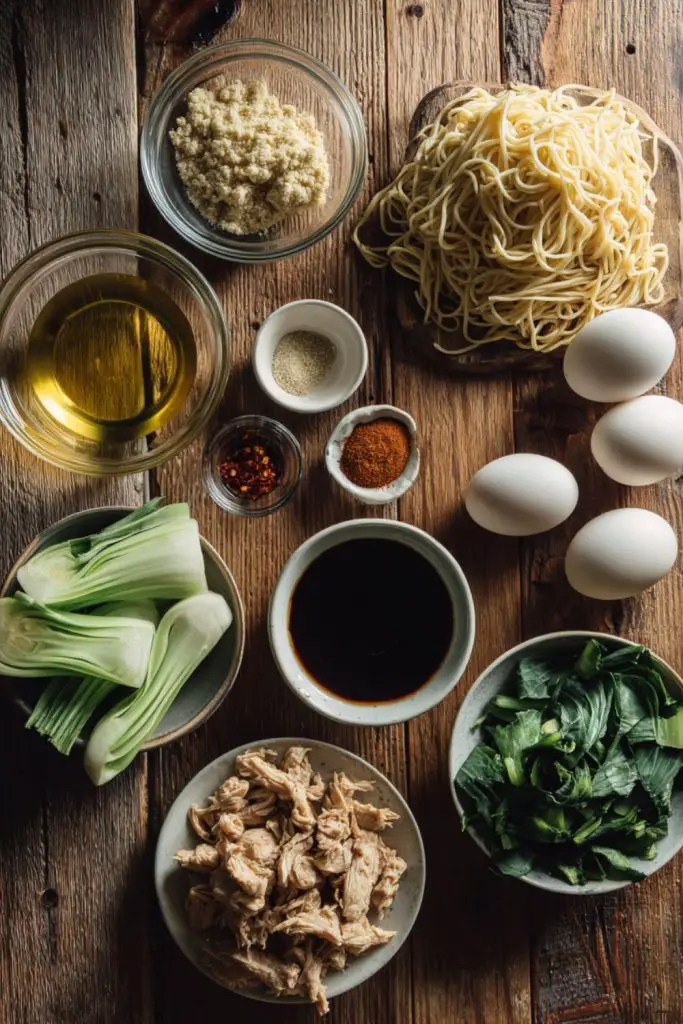
For the Low Sodium Chicken Ramen Soup:
- 1 teaspoon toasted sesame oil: adds nutty flavor.
- 2 cloves garlic: minced for strong taste.
- 1 teaspoon onion powder: enhances the broth.
- ½ teaspoon ground ginger: adds warmth.
- ¼ teaspoon cayenne pepper: optional for heat.
- 1 teaspoon low sodium soy sauce: use lightly.
- 1 cup chopped vegetables: bok choy, mushrooms, green onions.
- 4 cups water or no-salt-added vegetable stock: base of the soup.
- 4 ounces thin rice noodles: check for low sodium option.
- 2 cups cooked chicken breast: shredded, no salt added.
For the Ramen Egg:
- 2 eggs
- Water
Optional Toppings:
- Fresh parsley or cilantro
- Sesame seeds
- Chili flakes
How To Make Low Sodium Chicken Ramen:
Prepare the Ramen Eggs: Bring a small pot of water to a boil. Add eggs and cook for 7 minutes. Remove and cool under cold water. Peel and set aside.
Build the Broth: In a medium pot, heat sesame oil over low heat. Add garlic and sauté for 3 to 4 minutes until lightly golden.
Add Flavorings and Vegetables: Stir in onion powder, ginger, cayenne (if using), low sodium soy sauce, chopped vegetables, and water or stock. Bring to a boil, then reduce heat to medium.
Cook the Noodles: Add rice noodles directly into the broth. Cook according to package instructions until tender.
Add Chicken: Stir in the cooked chicken breast and let it warm through for 2 to 3 minutes.
Assemble the Bowls: Divide the soup into bowls. Slice the ramen eggs and place on top.
Add Toppings: Sprinkle with herbs, sesame seeds, or chili flakes if desired. Serve warm.

Recipe Tips:
- Use plain chicken breast to keep this ramen kidney-friendly.
- Add extra ginger or garlic for more flavorful without salt taste.
- Use low sodium soy sauce sparingly to help reduce sodium intake.
- Fresh herbs brighten the soup and make it feel more light and nourishing.
- Do not overcook noodles to keep the best texture.
How to Store & Reheat:
- Room Temperature: Do not leave out longer than 2 hours.
- Fridge: Store broth and noodles separately if possible, for up to 2 days.
- Freezer: Freeze broth only for up to 1 month. Reheat gently and add fresh noodles when serving.
Nutrition Facts:
- Calories: 280
- Sodium: 138 mg
- Protein: 22 g
- Fat: 8 g
- Carbs: 28 g
- Fibre: 2 g
- Sugar: 3 g
FAQs:
Is ramen okay for a low sodium diet?
Yes, homemade ramen can be low sodium when you avoid seasoning packets and use low sodium soy sauce and no-salt-added broth.
How do you make ramen flavorful without salt?
Use garlic, ginger, sesame oil, and fresh herbs. These create a rich and satisfying flavor without extra sodium.
What noodles are best for low sodium ramen?
Rice noodles or plain ramen noodles without seasoning packets are best. Always check labels for sodium content.
Can I use regular soy sauce?
It is better to use low sodium soy sauce to help reduce sodium intake and keep the dish heart-healthy.
Can I add more protein to this ramen?
Yes, you can add extra chicken, tofu, or even a second egg for more protein in this balanced low sodium dish.
Try More Recipes:
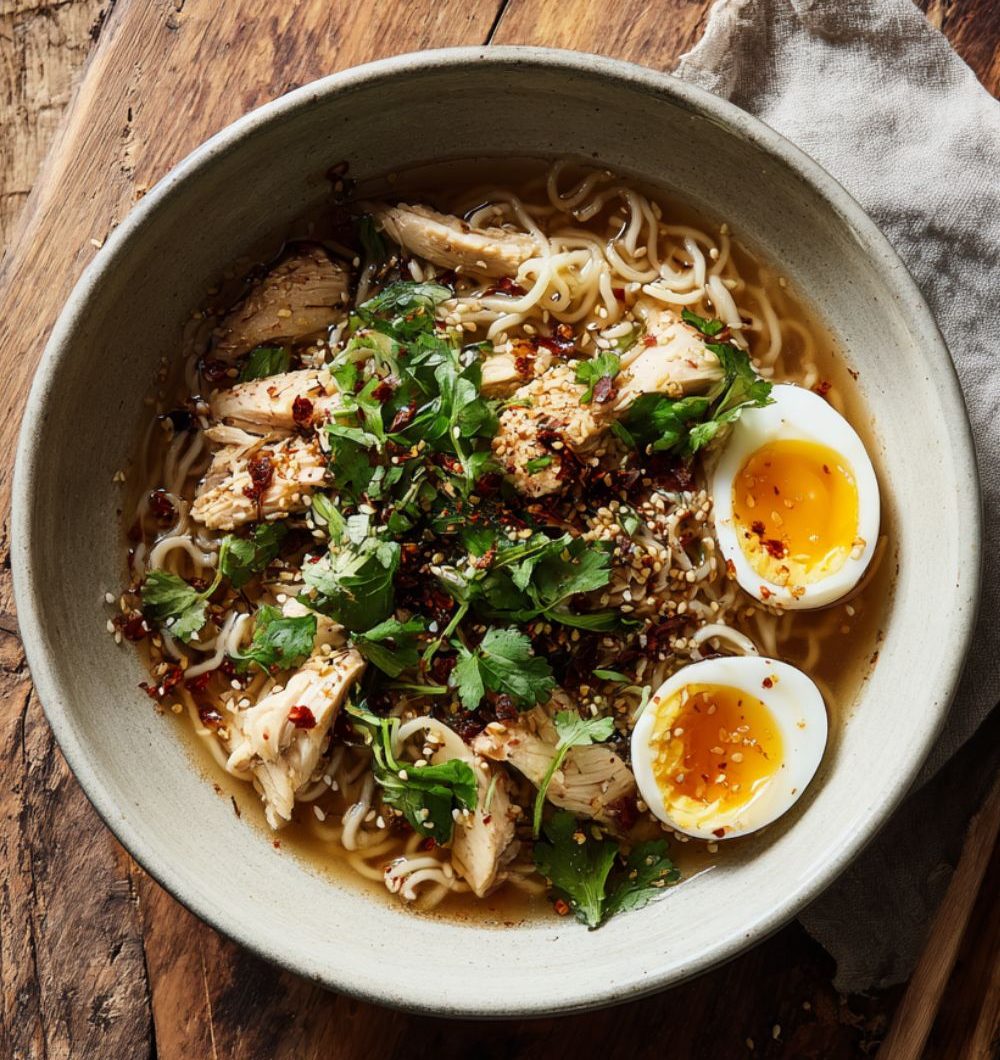
Low Sodium Chicken Ramen
A quick and comforting homemade ramen bowl made with tender chicken, rice noodles, and vegetables. This heart-healthy noodle soup is light, flavorful without salt, and perfect for a balanced low sodium meal.
Course: SoupsCuisine: AmericanDifficulty: Easy

Servings
2
servingsPrep time
10
minutesCooking time
15
minutesCalories
280
kcalTotal time
25
minutesIngredients
1 teaspoon toasted sesame oil
2 cloves garlic, minced
1 teaspoon onion powder
½ teaspoon ground ginger
¼ teaspoon cayenne pepper (optional)
1 teaspoon low sodium soy sauce
1 cup chopped vegetables
4 cups water or no-salt-added stock
4 ounces rice noodles
2 cups cooked chicken breast (no salt added)
2 eggs
Directions
- Boil eggs for 7 minutes, cool, peel, and set aside.
- Heat sesame oil and sauté garlic until golden.
- Add seasonings, vegetables, soy sauce, and water. Bring to a boil.
- Add noodles and cook until tender.
- Stir in chicken and heat through.
- Serve in bowls with sliced eggs and toppings.